Interior Architecture & Design / 5-year course

Interior Architect & Designer – 5-Year Program overview
5 years to become experts in Interior Architecture & Design
This dual program stands out on the market for its unique structure: it offers an equal balance between Interior Architecture and Design, with the same number of teaching hours dedicated to both disciplines.
This distinctive approach enables students to develop in-depth expertise in both fields, providing a comprehensive and versatile perspective to meet the diverse needs of future clients.
The five-year program is delivered in French or entirely in English in Paris and Strasbourg.
Parallel admissions are available throughout the program.
A program combining a strong foundation and personalized pathways
From the end of the Bachelor cycle onward, the Interior Architecture & Design program allows students to progressively refine their professional project. Depending on the campus, this development may take the form of dedicated specializations or a deliberately transversal pathway, offering a global vision of the professions of interior architecture and design.
Designed to reflect professional realities, the program integrates work-study opportunities at different stages depending on the campus, sometimes from Year 3 or Year 4 through Year 5. This flexibility enables each student to build a professional pathway aligned with their ambitions, rhythm and campus specificities, while benefiting from a high academic standard and strong recognition in the job market.
Campus-specific features:
- Paris : Specialization from Year 4, with Year 5 available as a work-study program.
- Rennes : Specializations in Culinary Design, Design Maker and Scenography (workshop formats in Years 4 and 5). Work-study possible in Year 5.
- Nantes : Transversal pathway without specialization. Work-study available in Year 5.
- Strasbourg : Specializations in Product Design or Scenography Design, with work-study starting in Year 4. European Track available in Year 5 (NABA, Milan).
- Bordeaux : Transversal pathway without specialization. Work-study possible from Year 3 of the Bachelor cycle.
- Toulouse : Transversal pathway in Year 4. Work-study accessible from Year 3 of the Bachelor cycle.
- Montpellier : Work-study possible from Year 3 of the Bachelor cycle, with a progressively professionalizing pathway.
This specialization trains students to become experts in innovation through design. It develops a strategic approach linking user needs, technologies and business models to transform ideas into concrete solutions.
Students learn to design, lead and support innovation projects while coordinating multidisciplinary teams with a responsible and forward-looking vision.
This specialization focuses on designing products, services and spaces dedicated to healthcare environments and medical devices. Students learn to address the specific needs of patients, healthcare professionals and institutions, contributing to medical innovation through ergonomic spatial design and connected objects promoting well-being.
This pathway prepares students to design projects with strong social and environmental impact. It addresses sustainability, inclusion and social responsibility in collaboration with public institutions, NGOs and mission-driven companies.
Students develop a critical and engaged approach, integrating eco-design and social design principles.
This specialization prepares students to work within the luxury sector, connected to craftsmanship and customer experience.
Students design high-end objects, spaces and scenographies, enhancing brand identity and mastering noble materials to create refined and distinctive projects.
This specialization explores branding and brand strategy.
Students learn to design environments, objects and experiences aligned with brand identity, integrating storytelling, innovation and narrative coherence to translate brand vision into creative concepts.
This specialization immerses students in design and maker culture.
It is designed for creative minds eager to explore digital fabrication and emerging technologies, encouraging students not only to design but also to produce, deliver and share functional and sustainable solutions.
This pathway focuses on culinary, food and gastronomic experiences, combining arts, culture, science and technique.
Students explore every dimension of the culinary experience, from ingredient selection to spatial staging, product packaging and consumption rituals.
This specialization covers live performance scenography (theatre, opera), exhibition design and retail/event environments.
Students learn to design coherent and effective visitor or customer journeys.
Through the European Track, LISAA Strasbourg partners with NABA – Nuova Accademia di Belle Arti in Milan to offer an international academic experience.
Students complete Year 4 at LISAA Strasbourg and Year 5 at NABA, earning a double diploma and developing a global professional perspective.
After three years of general training, this pathway offers specialization in product design, addressing object conception and sustainable design practices. The program may be studied in French or English.
This specialization prepares students to design products, furniture, individual and collective living spaces, commercial and event spaces, through a global approach linking interior architecture, service design and product design.
Study in English – International Track
The English-taught pathway in Paris and Strasbourg is ideal for students planning to work internationally.
It prepares students for global opportunities while strengthening fluency in English, a crucial competency in the international creative industry.
The program also facilitates international internships and employment opportunities through the school’s network and partnerships.
Program in Paris
Interior Architect & Designer – 5-Year Program
Year 1 – Integrated Foundation Year : Total annual hours: 727 hours
Total annual hours: 727 hours
Year 1 is centered on creativity. Students develop artistic culture, creativity and stylistic expression while acquiring fundamental knowledge in art history, ideation and representation techniques (drawing in all its forms and 2D digital tools), alongside project workshops.
UE1 – Fundamental Artistic Teaching
Color
Creative Process & Experimentation
Life Drawing
Observation & Analytical Drawing
Outdoor Sketching
UE2 – Cultural & Creative Teaching
Methodology
Creative Process & Project Techniques
Languages
UE3 – Specialized & Technical Teaching
Architecture
Design
Scenography
UE4 – Theoretical & Technical Teaching
Art History
Site Analysis
Digital Tools
Semiology
Jury | Examination | Workshop
Total annual hours: 650 hours
In Year 2, studio projects in Interior Architecture and Design become more demanding. Students must address technical aspects and provide realistic, implementable solutions. The curriculum includes technology courses covering materials and construction techniques. Full-scale models are developed in the school workshops.
UE1 – Design Studios
Interior Architecture Studio
Development / Production (Interior Architecture)
Design Studio
Development / Production (Design)
UE2 – Technology
Architecture Technology
Eco-design & Sustainable Construction
Design Technology
UE3 – Representation Techniques
Drawing & Plastic Arts Practices
Analytical Drawing & Perspective
Digital Tools & Visual Communication
UE4 – Cultural & Professional Teaching
History of Architecture & Design
Digital Usage Culture
Languages
Professional Practice
Jury | Examination | Workshop
Total annual hours: 650 hours
Year 3 deepens knowledge and competencies acquired in previous years. Students work on real projects in partnership with companies.
UE1 – Design Studios
Interior Architecture Studio
Design Studio
UE2 – Technology
Architecture Technology
Eco-design & Sustainable Construction
Design Technology
UE3 – Representation Techniques
Drawing & Plastic Arts Practices
Digital Tools & Visual Communication
Model-making & Fablab Workshop
UE4 – Cultural & Professional Teaching
History of Architecture & Design
Technology & Society
Languages
Professional Practice
Professionalization
Internship
Marketing
Jury | Examination | Workshop
Master’s Year 1
Total annual hours: 625 hours
In Year 4, students select a specialization (depending on campus): Global Design, Culinary Design, Hospitality & Restaurant Design, Sustainable Design, Scenography, Service Design & Interactive Spaces.
UE1 – Design Studios
Interior Architecture Studio
Design Studio
Specialization Studio
UE2 – Technology
Architecture Technology
Design Technology
UE3 – Representation Techniques
Graphic Design
Digital Tools
Visual Identity
Moving Image
UE4 – Cultural & Professional Teaching
Technology & Society
Marketing
Research & Monitoring
Essay
Project Management
English
Public Speaking
UE5 – Business Knowledge
Professionalization & Internship
UE6 – Competency Validation
Assessment Jury
Master’s Year 2 (Work-Study Program)
Total annual hours: 539 hours
Year 5 is delivered as a work-study program. The schedule alternates between two weeks in a company and one week at school.
UE1 – Design Studios
Interior Architecture & Design Studio
Specialization Studio
Innovation & Digitalization Studio
UE2 – Cultural & Professional Teaching
Project Direction
Visual Data
Management
Client Network Development
Marketing
Strategy
Sociology
Digital Culture
Culture & Innovation
Written & Spoken English
Anti-Discrimination Awareness
UE3 – Technology
Techniques & Technologies
Trends & Innovative Materials
UE4 – Representation & Communication Techniques
Graphic Design & Visual Communication
2D & 3D Digital Tools
Portfolio Development
Video & Sound
Moving Image (Video & Animation)
Personal Project Development
Narrative & Project Valorization
UE5 – Prototyping Workshops
Fablab
Volume Production
UE6 – Professional Support
Individual Student Follow-up
UE7 – Competency Validation
Assessment Jury
Program in Nantes
747 hours
UE1 – Fundamental Artistic Teaching
Analytical Drawing & Composition
Life Drawing Studies
Perspective & Sketching
Color
UE2 – Cultural & Creative Teaching
Art History
Creativity & Experimentation
Project Methodology
Foreign Languages (Distance Learning – FOAD)
Industry Talks
UE3 – Applied Arts Teaching
Theoretical Learning (Distance Learning – FOAD)
Graphic Design & Illustration Studio
Fashion Studio
Architecture & Design Studio
Animation Studio
Digital Tools
UE4 – Assessment
Discovery Workshop
Examinations
School Life
650 hours
Design Studio
Interior Architecture Studio
Design Studio
Industry Week
Architectural Survey
Technology
Architecture Technology
Design Technology
Representation Techniques
Drawing & Plastic Arts Practices
3D Digital Tools
2D Digital Tools
Visual Communication
Fablab
Technical Architectural Drawing
Cultural & Professional Teaching
Art History & Semiology
Professional Practice
Creative Monitoring & Trend Research
Project Methodology – Site Analysis
English
Internship Report Writing
Photography Week
Competency Validation
Book Jury
650 hours
Design Studio
Interior Architecture Studio
Design Studio
Industry Week
Architectural Survey
Technology
Architecture Technology
Design Technology
Representation Techniques
Drawing & Plastic Arts Practices
3D Digital Tools
2D Digital Tools
Visual Communication
Fablab
Technical Architectural Drawing
Cultural & Professional Teaching
History of Architecture & Design
Professional Practice
Project Methodology – Sociology of Uses
Construction Economics
English
Internship Report Writing
Visual Week
Competency Validation
Book Jury
748 hours
Design Studio
Architecture Design Studio
Design Studio
Professional Specialization Week
Cultural & Professional Teaching
Current Affairs / Monitoring & Research / Digital Culture
Project Methodology & Sociology of Uses
Design & Society
Marketing
Project Management & Construction Economics
Video / Sound
Lighting Design
Technology
Architecture Technology
Design Technology
Representation Techniques
Drawing & Plastic Arts Practices
2D Digital Tools (Archicad / Autocad)
Visual Communication
Fablab
3D Digital Tools (SketchUp / Artlantis / Rhino / KeyShot)
525 hours (initial program and work-study program)
Design Studios
Interior Architecture – Global Design
Design – Service Design
Cultural & Professional Teaching
Project Direction
Management
Marketing
Sociology
Digital Culture & Innovation
Programming
Citizenship & Ethics
Technology
Architecture Technology
Design Technology
Trends & Materials
Representation & Communication Techniques
Visual Communication
2D & 3D Digital Tools – Visual Production
Personal Project Development
Prototyping Workshop
Fablab – Volume Production
Program in Rennes
Total annual hours: 724 hours
Fundamental Artistic Teaching
Observation Drawing
Life Drawing
Color
Outdoor Sketching (+ Conventional Representation Methods – MCR)
Cultural & Creative Teaching
History of the Arts
Creative Process & Experimentation
Methodology
English
Graphic Design
Graphic Design Studio
Graphic Design Culture
Documentary Research
Digital Tools
Digital Drawing
Semiology
Interior Architecture & Design
Interior Architecture & Design Studio
Architecture & Design Culture
Volume
Conventional Representation Methods (MCR – including outdoor sketching)
Fashion
Fashion Studio
Portfolio & Personal Project
Juries
Workshops
Individual Follow-up
Total annual hours: 630 hours
Year 2 is structured around Interior Architecture and Design studios. Projects run over several weeks and complement one another, allowing students to understand the key components of the design process applied to both disciplines.
Technology courses, representation techniques and cultural and professional teaching reinforce fundamentals and support studio projects.
Design Studios
Interior Architecture Design Studio
Design Studio
Theoretical & Technical Teaching
Architecture Technology
Design Technology
Representation Techniques
Drawing & Plastic Arts Practices
Digital Tools & Visual Communication
Cultural & Professional Teaching
History of Architecture & Design
Professional Practice
Additional modules integrated into the curriculum:
Adobe Creative Suite
Social Sciences (SHS)
English (GlobalExam platform)
Methodology
Workshops
Total annual hours: 630 hours
Year 3 focuses on project-based design methodology, with both self-initiated and commissioned projects developed in collaboration with external partners. Projects become longer and more demanding.
Design Studios
Interior Architecture Design Studio
Design Studio
Theoretical & Technical Teaching
Architecture Technology
Design Technology
Representation Techniques
Drawing & Plastic Arts Practices
Digital Tools & Visual Communication
Cultural & Professional Teaching
History of Architecture & Design
Professional Practice
Additional modules:
Adobe Creative Suite
Social Sciences (SHS)
English (GlobalExam platform)
Project Methodology
Workshops
Total annual hours: 645 hours
Year 4 is dedicated to deepening and synthesizing acquired competencies.
Projects – both self-initiated and commissioned – become increasingly complex and are supported by research-based approaches.
Students fully articulate the principles of Global Design by integrating Interior Architecture and Design.
Design Studios
Interior Architecture Design Studio
Design Studio
Theoretical & Technical Teaching
Architecture Technology
Design Technology
Representation Techniques
Graphic Design
Digital Tools
Cultural & Professional Teaching
Marketing
Monitoring & Research
Project Management
Additional modules:
Risk Management
Professional Practice
Video & Sound
Social Sciences (SHS) / Thesis
English (GlobalExam platform)
Conferences
Workshops
Total annual hours: 540 hours
(initial program and work-study program)
Year 5 focuses on professional integration and personal positioning through work-study and the Final Year Project (PFE).
Students alternate between professional missions and a personal research & creation project. Each module contributes to the development of a Global Design project.
Starting from a brief proposed by a client, students articulate Interior Architecture (spatial design), Service Design, Product Design (object/furniture/packaging), Interface Design and Graphic Design within a coherent and singular concept.
Global Design is both a method and a vision. As responsible designers, students integrate sustainability concerns into their design process, addressing conceptual relevance as well as economic, ecological, social and political challenges.
Modules supporting the Final Year Project and work-study
- Global Design Studio
- Project Direction
- Management
- Marketing
- Sociology
- Culture & Innovation
- Techniques & Technologies
- Trends & Innovative Materials
- Graphic Design & Visual Communication
- 2D & 3D Digital Tools
- Moving Image
- Personal Project Development
- Fablab
- Volume Production
- Professional English (GlobalExam platform)
- Citizenship
Additional modules may include:
- Service Design
- Interface Design
- Project Management
- Video & Sound
- Professional Practice
The program in Strasbourg
Total annual hours: 650 hours
UE1 – Fundamental Artistic Teaching
Drawing
Life Drawing
Outdoor Sketching
Color
UE2 – Cultural & Creative Teaching
Art History
Creative Process & Experimentation
Project Methodology
Foreign Language
UE3 – Architecture Teaching
Case Study / Documentary Study (building, object rough concepts)
Architecture & Design Studio
UE4 – Graphic Design Teaching
Case Study / Documentary Study (storyboard, advertising)
Graphic Design Studio
UE5 – Technical Teaching
Digital Tools (Photoshop, InDesign, Illustrator)
Photography
UE6 – Applied Teaching
Eco-design
Applied Creative Process & Workshop
Applied Color
Specialization Option: Motion Design or 3D
UE7 – End-of-Year Project
Competency Validation
Total annual hours: 650 hours
(initial program – French/English hybrid delivery)
Year 2 marks specialization in Interior Architecture & Design. Technical knowledge becomes more precise and expectations more demanding. Students also begin working with digital fabrication and model-making tools.
UE1 – Design Studios
Interior Architecture
Design
UE2 – Technology
Architecture Technology
Design Technology
UE3 – Representation Techniques
Drawing
Digital Tools
UE4 – Cultural & Professional Teaching
History of Architecture & Design
Professional Practice
UE5 – Additional Professional Modules
Creative Process
Fablab
Photography
UE6 – Competency Validation
Jury
Total annual hours: 650 hours
(initial program – French/English hybrid delivery)
In Year 3, students fully enter a professional-oriented project approach. During the second semester, they engage in Global Design projects, combining Interior Architecture and Product Design in response to long-term briefs developed with external partners.
UE1 – Design Studios
Interior Architecture
Design
UE2 – Technology
Architecture Technology
Design Technology
UE3 – Representation Techniques
Visual Communication
2D & 3D Digital Tools
ARCHICAD
UE4 – Cultural & Professional Teaching
History of Architecture & Design
Professional Practice
UE5 – Additional Professional Modules
3D Visualization
Extended Realities / Artificial Intelligence
Project Direction
Semiology
UE6 – Competency Validation
Jury
Total annual hours: 625 hours
(initial program / work-study / internship – French/English hybrid delivery)
In Year 4, students work on long-term, ambitious projects developed in collaboration with external partners and/or linked to international competitions. Professional positioning becomes central to project development and communication. Year 4 can be completed as a work-study program or as a full-time initial program.
UE1 – Design Studios
Interior Architecture
Design
UE2 – Technology
Architecture Technology
Design Technology
UE3 – Representation Techniques
Graphic Design & Visual Communication
3D Digital Tools
Virtual Reality / Augmented Reality
Parametric Design
Extended Realities / Artificial Intelligence
UE4 – Cultural & Professional Teaching
Marketing
Monitoring & Research
Project Management
UE5 – Additional Professional Modules
Scenography / Museography
Sociology
Entrepreneurship
UE6 – Competency Validation
Jury
Total annual hours: 539 hours
(work-study program – French/English hybrid delivery)
Year 5 marks the culmination of the program. Students develop a Global Design project over the course of the year, combining Interior Architecture, Product or Service Design and Scenography. They mobilize complementary competencies to imagine innovative solutions addressing present and future environmental challenges.
This is an intensive year, as students simultaneously carry out agency-based professional missions and their personal Final Year Project.
UE1 – Design Studios
Interior Architecture & Global Design
Interior Architecture & Product Design
Interior Architecture & Scenography Design
UE2 – Cultural & Professional Teaching
Project Direction
Management
Marketing
Sociology
Digital Culture
English
Anti-Discrimination Awareness
UE3 – Technology
Techniques & Technologies
Innovative Materials
UE4 – Representation & Communication
Visual Communication
Digital Tools
Moving Image
Personal Project Development
UE5 – Prototyping Workshops
Fablab
Volume Production
UE6 – Additional Professional Modules
BIM (Building Information Modeling)
Eco-design Studio
Extended Realities / Artificial Intelligence
Service Design
UE7 – Competency Validation
Jury
Upon completion of this program, students are awarded the following state-recognised professional certification, registered in the French National Directory of Professional Certifications (RNCP):
Architecte d’intérieur-designer – IDAA LISAA – Level 7, registered under RNCP number 40151 by decision of the Director General of France Compétences dated 31 January 2025.
If you do not obtain the full RNCP certification but have validated all the competencies associated with a specific block, that competency block remains acquired.
91,4%
Certification success rate for the RNCP qualification Architecte d’intérieur-designer
(June 2024)
100%
Graduate employment rate at 6 months (2022*)
* Most recent rate published by France Compétences
0,2% Training interruption rate for apprentices during the 2023–2024 academic year (CFA IDAA level)
Admission requirements
Initial program (cumulative pathway)
5-year curriculum
Applicants must hold a Level 4 qualification (Baccalaureate), a DAEU, or an equivalent diploma (including foreign qualifications).
4-year curriculum
Applicants must hold a Level 4 qualification (Baccalaureate), a DAEU, or an equivalent diploma (including foreign qualifications) and have validated 60 ECTS credits in Interior Architecture, Scenography, or Design (Space Design, Product Design, Service Design or Global Design).
3-year curriculum
Applicants must hold a Level 5 qualification or an equivalent diploma in Interior Architecture, Scenography, or Design (Space Design, Product Design, Service Design or Global Design).
1- or 2-year curriculum
Applicants must hold a Level 6 qualification (Bachelor’s degree / Bac+3/4) or an equivalent diploma in Interior Architecture, Scenography, or Design (Space Design, Product Design, Service Design or Global Design).
Work-study program (apprenticeship or professional training contract)
3-year curriculum
Applicants must hold a Level 5 qualification or an equivalent diploma in Interior Architecture, Scenography, or Design.
2-year curriculum
Applicants must hold a Level 6 qualification or an equivalent diploma in Interior Architecture, Scenography, or Design.
1-year curriculum
Applicants must hold a Level 6 qualification or an equivalent diploma in Interior Architecture, Scenography, or Design.
Specific exemptions
If the applicant does not hold the required diploma or professional experience, they must submit a portfolio demonstrating their ability to validate the professional certification (Recognition of Prior Learning – VAP, employer certificates or any evidence of professional, personal or associative experience demonstrating related competencies).
This recognition process is comparable to a blended VAE pathway.
How to apply
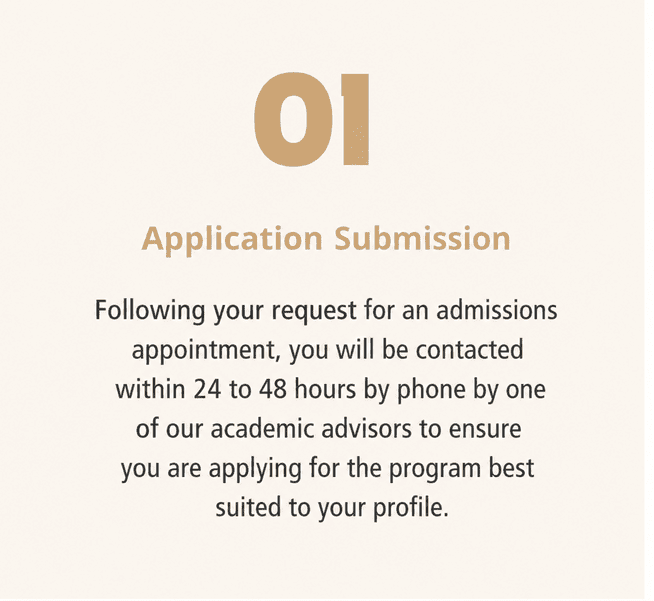
Admission to LISAA is based on an interview and is conducted outside the Parcoursup platform.
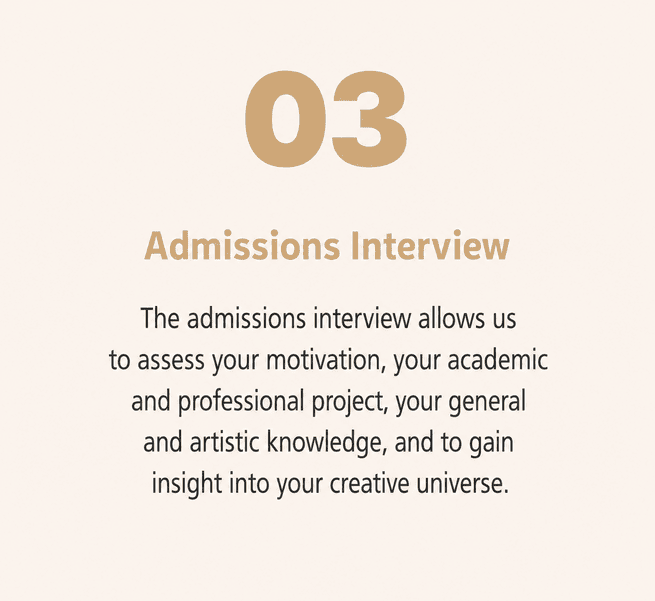
The admissions interview assesses the candidate’s motivation and includes:
- Evaluation of general and artistic knowledge
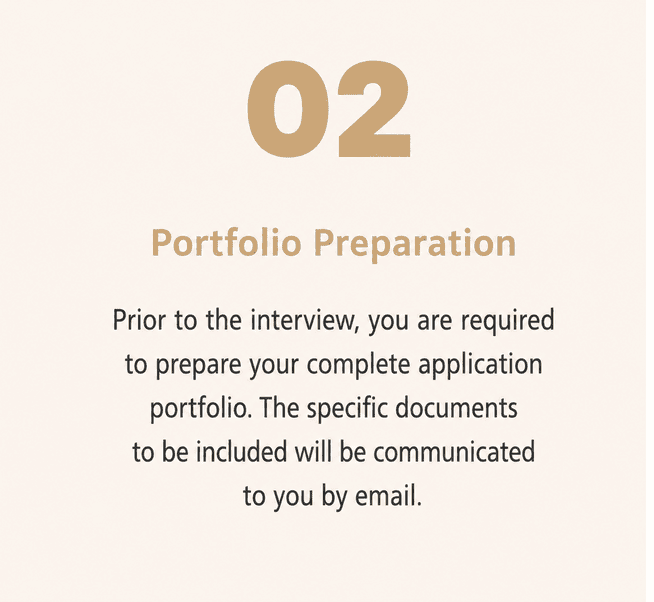
- Presentation of personal work (drawings, illustrations, photographs, graphic projects, personal research, models, etc.) for applications to Year 1 or the preparatory year
- Presentation of a project portfolio for applications from Year 2 onward
- For Master’s level entry: applications from all relevant fields of study are considered
The oral interview and portfolio review enable the admissions team to evaluate your motivation, professional project and your ability to mobilize previously acquired knowledge and skills within the framework of this program.
Applicants who have already obtained an RNCP qualification of a similar level and specialization may request full or partial Advanced Standing via the contact page.
Applicants are informed of the admission decision within one week after the interview.
Access timelines
Admissions are open from October to August for a September intake.
Applications are processed within a maximum of three weeks after receipt of a complete file. Enrollment remains possible until the start date of the program, subject to availability.
By way of exception, enrollment may be authorized after the program start date, following an assessment of the student’s ability to catch up on missed coursework, within a maximum of two months after the program begins.
All admission procedures are available on the dedicated page.
Tuition fees
Full details of tuition fees and additional costs are available on the dedicated page.
The Interior Architecture & Design program at LISAA aims to train well-rounded and responsible professionals capable of designing and delivering meaningful projects in a constantly evolving world. It does not simply transmit technical skills; it builds a way of thinking, creating and acting.
This unique dual curriculum combines Interior Architecture and Design, enabling students to develop a broad, systemic and transversal vision of the project. They learn to think simultaneously about space, object, use and experience. This hybrid approach is a major strength: it fosters analytical flexibility, creative agility and the ability to operate across multiple scales, from furniture to built environments, from spatial planning to service design.
Throughout the five years, students develop a strong visual and critical culture, sensitivity to materiality and light, methodological rigor and creative inventiveness. They learn to observe uses carefully, question needs, formulate a clear intention and construct a coherent and inspiring project narrative. Through studios, research and experimentation, they also develop a personal expression and a distinctive creative identity.
Over time, students engage in collaborative design processes, learn to interact with various stakeholders, structure their approach and defend their ideas. They become capable of transforming intuition into structured solutions, reconciling constraints with creativity and translating reflection into concrete, engaging proposals.
Campus-specific pathways :
- Paris: Students choose a specialization among five areas — Global Design, Impact, Health, Luxury & Craftsmanship, and Brand Strategy. Year 5 may be completed as a work-study program.
- Rennes: Specialization begins in Year 4 through workshop formats in Culinary Design, Design Maker or Scenography, extended into Year 5. Work-study is available in Year 5.
- Strasbourg: Students specialize from Year 4 in Product Design or Scenography Design, with work-study also available from Year 4 onward. A European Track is offered in Year 5 (year at NABA, Milan).
- Nantes: The pathway remains intentionally transversal, without specialization, to develop a global vision of the profession. Work-study is offered in Year 5.
- Bordeaux: The curriculum follows a transversal approach without specialization, with work-study possible from Year 3 of the Bachelor.
- Toulouse: No specialization is offered in Year 4; work-study is accessible from Year 3 of the Bachelor.
- Montpellier: The pathway is based on progressive professionalization, with work-study possible from Year 3 of the Bachelor (three-year contract).
Regardless of the campus, the objective is to train Interior Architects and Designers capable of understanding their environment and proposing sensitive, relevant and sustainable forms and uses. At once creator, designer, thinker and maker, the student becomes a complete, autonomous, inventive and committed professional.
Students are assessed continuously throughout the program.
Continuous assessment takes place throughout the academic year. All subjects are evaluated through project submissions, oral presentations, written assignments, multiple-choice tests and other forms of assessment.
End-of-semester evaluations allow for a review of student progression and validation of the semester and progression to the next academic year.
Certification assessment
Assessment for the RNCP Level 7 certification includes:
- A real or simulated Interior Architecture and/or Design project involving: analysis of the brief, monitoring report, site and user needs analysis and service proposal
- A professional simulation involving the facilitation of an ideation workshop in response to an Interior Architecture and/or Design issue
- A case study involving supplier or service provider selection, preliminary budget estimation, project planning and completion of associated administrative procedures
- A reflective analysis focusing on the coordination of an Interior Architecture or Design project
- A professional simulation involving business creation, communication strategy definition, professional network development strategy, and the presentation and promotion of a project and professional identity
Validation of Individual Competency Blocks
Certification is awarded upon validation of all competency blocks.
If you do not obtain the full RNCP qualification but have validated all competencies related to a specific block, that competency block remains acquired.
LISAA’s pedagogy is designed to support your progression toward successful professional integration. It relies on a variety of methods:
- A project-based pedagogy: professional simulations conducted individually or in groups based on real cases proposed by partner companies or representative case studies. Students present their projects orally and in writing, supported by visuals and models. Presentations are evaluated by faculty members and, in some cases, industry professionals.
- Courses delivered by active professionals who are experts in their field.
- Individual academic follow-up enabling each student to assess their progression toward competency acquisition and to refine their professional project.
- Within the work-study format, dedicated support modules to assist students in securing an apprenticeship or professional training contract.
- Professional talks and conferences led by alumni and industry professionals.
- Internship periods integrated into the program to allow students to develop their skills in real-world professional environments.